Choosing the right chair can shape the comfort, appearance, and flow of any event or dining space. In 2026, banquet chairs and dining chairs remain common choices for hotels, restaurants, wedding venues, homes, and conference rooms. However, they are not designed for exactly the same purpose. Their frames, proportions, upholstery, stacking ability, and expected use often differ.
So, what is the difference between a banquet chair and a dining chair? A banquet chair usually supports flexible seating layouts, frequent movement, and efficient storage. Many models feature lightweight steel frames, padded seats, and stackable designs. Picture a hotel team moving fifty chairs from a storage room to a ballroom in minutes. A dining chair usually focuses more on permanent placement, personal comfort, and visual harmony with a table. It may use wood, metal, molded plastic, or decorative upholstery.
Small details matter. Seat height can affect posture and table comfort. A narrow frame may save space but feel less supportive during a long meal. A heavily padded chair may look inviting, yet require more maintenance in busy venues. From practical purchasing experience, durability is often underestimated. Style receives attention first.
That approach can be misleading. The best chair depends on traffic, storage space, cleaning routines, table height, and budget. This guide compares both types through practical features and professional selection criteria. It also considers where each chair performs well, where it falls short, and which assumptions deserve a second look. There is no universal winner. The right choice should serve the room, its users, and its daily demands.
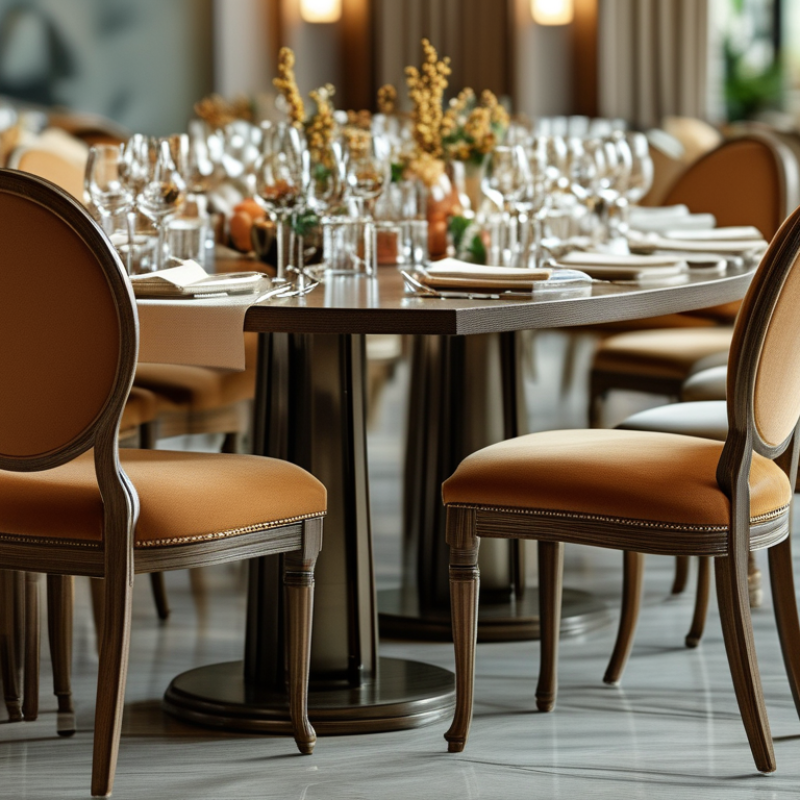
In 2026, chair selection is moving beyond appearance toward venue and function.
Banquet chairs belong to event seating systems. They support weddings, conferences, training rooms, and large dining halls. Their priorities are stackability, transport, consistent spacing, and quick room changes. A staff member should move several chairs without struggling. A uniform row also improves service flow and photographs.
Dining chairs serve longer, more settled meals.
Restaurants, cafés, private dining rooms, and hospitality lounges usually need stronger ergonomic support. A seat height near 17 to 19 inches often suits standard tables, but table dimensions must be checked. Back angle, seat cushioning, and arm clearance affect comfort after an hour. Small details matter. A sharp frame edge can become irritating during a long dinner.
The taxonomy is not absolute.
Some dining chairs work well in elegant banquets, while selected banquet chairs suit casual restaurants. The venue’s turnover rate, storage space, floor surface, and cleaning routine should guide the decision.
In practical planning, I have found that visual matching is often overvalued. It can hide weak stacking performance or poor posture support.
A better review includes a sample chair, a measured table, and a full service test. Even then, personal comfort varies, so one “ideal” category may still need reconsideration.
2026 Top Types: Banquet Chair vs Dining Chair
A 17–19-inch seat works well with a 28–30-inch table because it leaves practical legroom. This pairing suits banquet halls, restaurants, and event venues with frequent turnover. The National Restaurant Association’s 2024 State of the Restaurant Industry Report identifies off-premises demand and operational efficiency as continuing priorities. Compact, stackable seating supports both.
Measure the finished seat height, not only the frame. Cushion compression can lower the seat by nearly an inch during use. That small change affects taller guests quickly. The 2010 ADA Standards specify dining surfaces between 28 and 34 inches high, with required knee clearance for accessible positions. A 28–30-inch table therefore fits common commercial layouts, but clearance underneath still needs checking.
Banquet chairs usually prioritize stacking and quick room changes. Dining chairs often provide deeper cushions and stronger visual character. ANSI/BIFMA seating standards focus on performance testing, not one universal chair size, so test the actual furniture together. A 19-inch seat may feel generous, yet crowded table spacing can erase that comfort. I have seen layouts look correct on drawings and feel tight during service. Measure with real plates, knees, and movement. Small errors become obvious.
Standard furniture dimensions are closely aligned across both categories: chair seats are commonly about 17–19 inches high and wide, while matching dining or banquet tables are typically 28–30 inches high.
When comparing 2026 banquet chairs with dining chairs, start with venue demands, not appearance. In event work, I have moved rows of chairs through narrow service doors. Stackable banquet chairs reduce storage pressure and speed room changes. Many models stack vertically, often in neat columns of eight to twelve. That detail matters when a hall serves dinner at six and hosts dancing at eight. Folding designs travel easily between rooms and fit into rolling carts. However, hinges and locking points deserve close inspection. A chair that folds smoothly may still feel unstable on uneven flooring. Test it with real table spacing, not a showroom floor.
Weight ratings require careful reading. Some banquet chairs advertise capacities up to 1,000 pounds, but that figure usually reflects controlled testing. It may not represent repeated impacts, tilted sitting, or damaged surfaces. Ask for the test standard, rating method, and maintenance guidance. A conservative safety margin is sensible. Dining chairs usually offer a more residential profile, with wider styling choices and less frequent handling. They can feel warmer around a single table, yet they often consume more storage space. Banquet chairs prioritize uniformity, quick folding, and dependable turnover. They are not automatically better. I once favored maximum capacity and overlooked seat comfort during a long reception. That mistake changed my checklist. I now assess frame alignment, seat support, carry weight, floor contact, and cleaning time. Small details become expensive when staff repeat them every weekend.
| Comparison Dimension | Banquet Chair | Dining Chair | Common Types or Design Options | Practical Selection Note |
|---|---|---|---|---|
| Primary use | Hotels, event halls, conference rooms, churches, training areas, and temporary seating layouts. | Restaurants, dining rooms, cafés, kitchens, and permanent hospitality settings. | Upholstered steel-frame, resin, plastic, wood folding, and stackable banquet designs. | Choose banquet chairs when rooms must be rearranged frequently; choose dining chairs when a fixed appearance is more important. |
| Typical seat height | Approximately 17–19 in (43–48 cm). | Approximately 17–19 in (43–48 cm). | Standard-height seating for conventional dining tables. | Seat height should be matched with the table; a comfortable table-to-seat clearance is commonly about 10–12 in. |
| Typical overall width | Approximately 17–20 in (43–51 cm), depending on the frame and upholstery. | Approximately 16–22 in (41–56 cm), with wider lounge-style dining models available. | Narrow banquet profiles maximize seating capacity in rows and at rectangular tables. | Measure the chair width together with aisle clearance and table spacing before ordering. |
| Stackability | Often designed for stacking; common stack quantities range from about 4 to 12 chairs, while purpose-built models may stack higher. | Usually limited or not available; stacking depends on the leg shape and chair geometry. | Stackable steel-frame, resin, plastic, and select wood banquet chairs. | Confirm the manufacturer’s approved stack height and use a transport dolly to reduce handling risk. |
| Folding capability | Common in metal, plastic, resin, and wood folding models. | Less common; most dining chairs are rigid and intended to remain in place. | Tube-frame folding, padded folding, resin folding, and wood folding designs. | Folding chairs save storage space but require checks for hinge security, pinch points, and locking action. |
| Storage efficiency | High when the chair is stackable or foldable; flat-folding models can reduce storage depth. | Moderate to low because fixed legs and decorative frames usually need more floor space. | Stacking carts, folding racks, and chair dollies are commonly used with banquet seating. | Calculate storage by the actual stacked footprint, not only by the chair’s open dimensions. |
| Weight capacity | Common published ratings range from about 300 to 1,000 lb (136–454 kg), depending on construction and testing. | Common published ratings often range from about 250 to 500 lb (113–227 kg), but the rating varies by model. | Reinforced steel frames and heavy-duty commercial frames generally support higher rated loads. | A 1,000-lb rating is model-specific, not a universal banquet-chair standard. Check the published static-load rating and test method. |
| Frame materials | Powder-coated steel is common; aluminum and solid wood frames are also available. | Solid wood, molded plastic, steel, aluminum, and mixed-material frames are common. | Steel frames provide rigidity; aluminum reduces weight; wood emphasizes appearance. | For frequent commercial handling, inspect welds, joints, protective feet, and frame-gauge specifications. |
| Seat and back construction | Typical options include foam-padded upholstery, molded resin, molded plastic, or wood seats and backs. | Upholstered, wood, molded plastic, woven, and contoured designs are widely used. | Banquet upholstery may use fabric, vinyl, or stain-resistant commercial coverings. | For events, removable or easy-clean upholstery can simplify maintenance between uses. |
| Comfort for extended seating | Padded seats and contoured backs are common for conferences, ceremonies, and formal dinners. | Comfort varies widely; dining chairs may prioritize visual design over thick padding. | Foam density, seat depth, back angle, and lumbar contour affect perceived comfort. | Test a sample chair for the expected sitting duration instead of judging comfort by padding thickness alone. |
| Durability expectations | Commercial banquet models are built for repeated setup, transport, stacking, and high turnover. | Residential models may receive lighter use; commercial dining models are designed for higher traffic. | Reinforced joints, replaceable glides, durable finishes, and abrasion-resistant coverings improve service life. | Use commercial-grade specifications for venues with daily events or frequent chair movement. |
| Cleaning and maintenance | Resin and plastic surfaces are generally easy to wipe; upholstered surfaces require fabric-appropriate care. | Cleaning requirements depend on wood finish, upholstery, woven material, or molded shell. | Vinyl and molded surfaces are commonly selected where spill resistance is important. | Follow the care instructions for the specific covering; harsh chemicals may damage finishes and upholstery. |
| Appearance | Usually coordinated for uniform rows, formal events, and consistent room layouts. | Offers a broader range of decorative silhouettes, finishes, colors, and statement designs. | Neutral upholstery, wood-look resin, classic padded backs, and decorative event styles. | Banquet chairs can provide a uniform look, while dining chairs offer more flexibility for interior styling. |
| Typical transport method | Chair dollies, stacking carts, folding racks, and transport trolleys. | Usually moved individually or in small groups; specialized carts are less common. | Vertical stack carts for rigid chairs and flat carts for folding chairs. | Select cart-compatible chairs when staff will frequently set up or clear large rooms. |
| Best choice for | Frequent room changes, large guest counts, temporary layouts, and compact storage. | Permanent dining areas, design-led interiors, and settings where chairs remain arranged. | Use folding or stackable banquet models for flexibility; use fixed dining models for visual continuity. | Prioritize capacity, storage, handling, and verified load ratings for event operations. |
Dining chairs need more than a polished frame. They support longer meals, meetings, and conversations. A seat height near 450 millimetres usually supports table alignment, but body proportions still vary. The backrest should support the lower back without forcing the shoulders forward. Excessively soft foam may feel comfortable initially. It can also collapse and create poor posture over time.
The World Health Organization reported that 1.71 billion people live with musculoskeletal conditions worldwide. This figure is not chair-specific, but it shows why ergonomics deserves serious attention.
Upholstery changes both comfort and maintenance. Tightly woven polyester resists everyday abrasion, while coated fabrics handle spills more easily. However, waterproof surfaces may feel warm during long use.
EN 16139 evaluates non-domestic seating for strength, durability, and safety through laboratory testing. A dining chair should be assessed under repeated loading, not only visual inspection.
Test results should identify the applied method, load level, and failure condition. A passing report improves confidence, but it cannot predict every venue’s abuse. I would not treat one certificate as permanent proof. Loose screws, uneven floors, and careless stacking still shorten service life.
Tips: Check the chair at table height before ordering. Sit for ten minutes. Inspect the seam near the front edge. Ask for EN 16139 documentation and maintenance instructions. Banquet chairs often prioritize stacking and transport, while dining chairs should prioritize sustained sitting. That difference is easy to miss.
Traffic should shape the decision before appearance. The National Restaurant Association’s 2024 industry report projected U.S. restaurant sales above $1 trillion. That scale means frequent movement, cleaning, and replacement planning matter. Banquet chairs suit high-turnover rooms because they stack tightly and move in groups. Dining chairs feel more residential, but their wider frames can consume valuable storage space.
Measure the storage corner first. A stack that blocks a service door is a daily operational mistake. Check the chair’s tested load, frame joints, and cleaning resistance against ANSI/BIFMA performance standards.
For comfort, compare seat depth, back support, and cushion recovery during a 60-minute meal. The Events Industry Council’s 2023 global report valued business events at $1.6 trillion, showing why flexible seating remains important. Still, event comfort should not become an excuse for fragile upholstery.
Style affects perceived quality. Dining chairs can make a formal room warmer, while banquet chairs support quick layout changes. Cost needs a lifecycle view. The U.S. Bureau of Labor Statistics tracks furniture prices separately from labor and service expenses, reminding buyers that purchase price is only one variable. My first instinct favors banquet chairs for busy venues. That judgment is imperfect. A quiet private dining room may recover its higher storage cost through stronger atmosphere and longer guest stays. Test both types in the actual room, with staff moving them repeatedly.
: Banquet chairs support quick changes, stacking, transport, and uniform spacing. Dining chairs prioritize comfort during longer meals. Neither category is always better.
A 17–19-inch seat often fits a 28–30-inch table. Measure the finished seat height. Cushion compression can reduce it during use.
Stackable chairs save storage space and speed room changes. Columns of eight to twelve chairs can simplify handling. Check the staff’s lifting ability.
Folding chairs travel easily and fit rolling carts. Inspect hinges and locking points carefully. A smooth fold does not guarantee stability.
Yes, if comfort and appearance matter more than rapid storage. Check their stacking height, carrying weight, and cleaning time. Space can disappear quickly.
Ask how the rating was tested and maintained. Check frame alignment, seat support, floor contact, and repeated-use performance. A high number may mislead.
Place the actual chair beside the actual table. Add plates, knees, and normal movement. Drawings can look generous. Real service may feel tight.
No. Appearance can hide poor posture support or weak stacking. I once favored capacity and overlooked comfort during a long reception.
Back angle, cushioning, arm clearance, and frame edges all matter. A sharp edge becomes irritating after an hour. Personal comfort still varies.
Test one sample chair with a measured table and realistic service movement. Review storage, floor surfaces, turnover, and cleaning routines. Reconsider the “ideal” category when evidence disagrees.
In 2026, choosing between banquet and dining chairs depends on the venue, frequency of use, and desired guest experience. A banquet chair is designed for flexible event spaces, with stackable or folding construction that simplifies transport and storage. Many models support heavy, frequent use and may offer weight capacities of up to 1,000 pounds. By contrast, dining chairs focus more on long-term comfort, ergonomic support, upholstery, and visual coordination with tables and interior design.
When asking “what is the difference between a banquet chair and a dining chair,” the key distinction is function: banquet chairs prioritize mobility, durability, and efficient storage, while dining chairs emphasize comfort, style, and everyday seating. Standard planning usually pairs 17–19-inch seat heights with 28–30-inch tables. Buyers should compare traffic levels, storage space, comfort requirements, appearance, maintenance needs, and total cost before selecting the most suitable chair type for their venue.

Zabs Furniture