Banquet tables can look stable on a showroom floor, then creep across polished tile when guests lean in or plates shift. Even a small movement can interrupt service, scrape the floor, or make people uneasy. The problem is not always the table itself. Smooth surfaces, uneven feet, loose hardware, and weight placed near an edge can all contribute.
Small shifts matter. Finding how to stop banquet tables from sliding on smooth floors starts with checking the setup, not reaching for the first handy fix. A rubber grip pad may help one table, while another needs its feet adjusted or its locking casters checked. Floor type matters, too: a solution suited to sealed concrete may not grip the same way on polished stone or vinyl. Test any product in a discreet area and follow its care instructions.
This guide explores five practical options, including non-slip pads, suitable table feet, caster locks, careful placement, and balanced loading. It also explains what to inspect before guests arrive. A quick fix can work in one room and fail in another; that is easy to underestimate. Test the table with a gentle push, check that it sits level, and keep walkways clear. Small checks help. If movement continues, stop using the unstable setup until the cause is addressed.
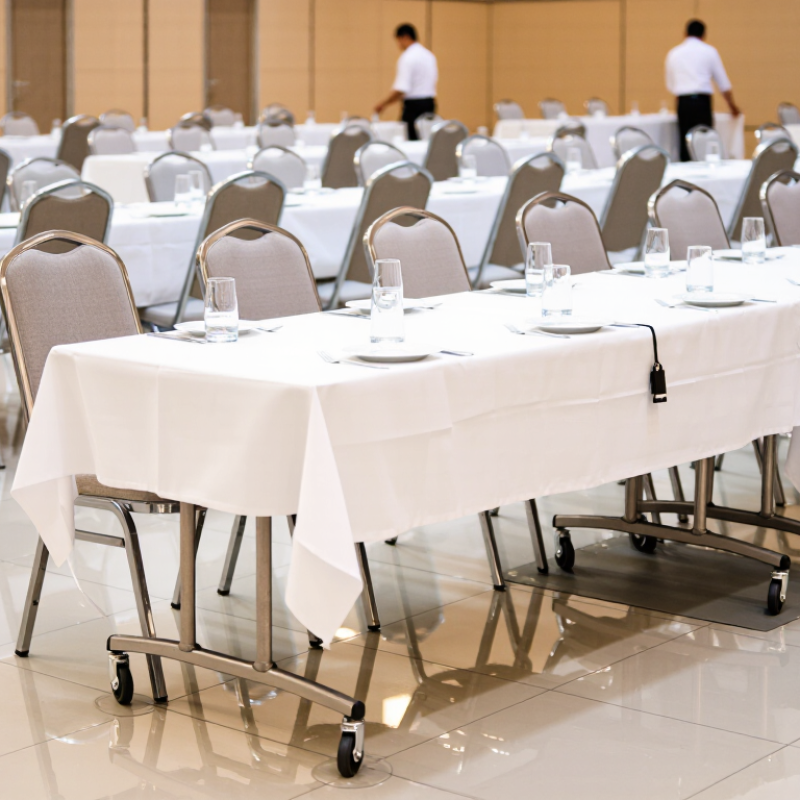
Identify Why Banquet Tables Slide on Smooth Floors
5 Best Ways to Stop Banquet Tables Sliding on Smooth Floors
Identify Why Banquet Tables Slide on Smooth Floors
Banquet tables slide when their feet cannot grip the floor or the frame shifts under pressure. Polished concrete, sealed wood, and vinyl can be especially slick when dusty or damp. Worn glides, missing rubber caps, and uneven legs reduce contact even further. A server leaning on one edge can then send the table moving. Small movements matter. CDC reports that about 14 million U.S. adults aged 65 and older fall each year, roughly one in four. That figure is not specific to banquet tables, but it underlines why unstable furniture deserves attention.
Check the floor and each table foot before adding heavier weights or improvised fixes. Look for spilled drink residue, cleaning film, grit, cracked caps, and legs that rock on a flat surface. A table may slide only when loaded unevenly, so test it gently from each side. The cause is sometimes a mix of floor finish and worn feet, not one obvious fault.
Tips: Clean and fully dry the floor, then inspect glides for wear or mismatched sizes. Test the table with a light sideways push before guests arrive. If it still moves, isolate the problem by trying it on another clean floor. Be careful: quick fixes can hide a damaged leg rather than solve it.
Choose Non-Slip Pads for Table Legs
Choose non-slip pads sized to cover each table leg’s contact area. Rubber or silicone pads usually grip smooth tile, sealed concrete, and polished wood better than felt. Felt can protect floors, but it may slide when a loaded table is bumped. Check the pad’s shape and thickness; a small mismatch can leave a leg rocking. A close fit matters.
Clean each leg and floor spot before fitting the pads. Dust, crumbs, and dried cleaner can weaken their grip. Press each pad firmly into place, then push the empty table gently from different sides. It should stay put without wobbling. Test again after adding place settings or serving dishes, since uneven weight can shift a table. Small details count.
Some pads collect grit underneath, so lift and inspect them during longer events. Grit can scratch a floor, even when the pad itself feels soft. Replace torn or flattened pads; worn rubber is less reliable. Check the floor finish, too, because certain materials may leave marks or residue. I would not assume one pad suits every venue. A quick test on an inconspicuous spot can prevent an awkward surprise.
Add Rubber Caps or Grip Feet
Rubber caps or replaceable grip feet are a simple way to reduce banquet-table movement on smooth floors. Choose a snug fit: a cap that slips off the leg can create more trouble than it prevents. Clean dust and dried drink residue from both the floor and the rubber before setting tables. Small grit can reduce contact and leave marks.
The UK Health and Safety Executive’s GEIS2 guidance classifies floor surfaces tested with a pendulum device: a Pendulum Test Value of 36 or above indicates low slip potential; 25–35 indicates moderate potential; below 25 indicates high potential. These figures assess flooring, not a table-and-foot combination, so they cannot guarantee a stationary table. Check the assembled setup on the actual floor. Push gently from each side. It should stay put.
Match each cap to the leg’s shape and diameter, and replace cracked or flattened rubber. Avoid stacking loose pads under uneven legs; they can shift during service. A quick check before guests arrive helps, though it is easy to miss one table. Keep a few spare feet nearby, and recheck after tables are moved.
Secure Tables with Floor-Safe Grip Mats
On polished tile or sealed wood, banquet tables can creep when guests lean against the edge or servers set down heavy trays.
Floor-safe grip mats add friction beneath each leg without relying on tape or a rough, scratch-prone surface. Choose mats made for hard floors, and check that they are clean, flat, and large enough to support the feet. A thin mat that bunches under a leg can make the table less stable, not more.
Test the setup before guests arrive. Place a mat under every leg, then gently push the table from different sides. It should resist movement without rocking. Wipe away dust and crumbs first; even a small grain can affect grip. Check the floor and mat materials together, since finishes vary and no product suits every surface. If the floor feels damp, dry it before setting up. A quick test helps. Still, mats cannot correct a warped table or an uneven floor, and I would not treat them as a substitute for careful placement. Recheck the tables after moving chairs or rearranging the room.
Stabilize Table Rows with Connectors and Proper Placement
On polished floors, a straight-looking banquet row can still creep when guests lean or chairs bump it. Connectors help neighboring tables move as one unit, but only when they fit the table frames securely. Use connectors intended for the table style, and attach them at matching points on each frame. Do not force a loose or awkward fit. Small details matter.
Before linking tables, clear grit and spilled liquid from the floor; even a tiny patch can reduce grip. Set each table with all legs flat, then align the edges. Keep the row clear of floor seams or raised transitions where practical. A leg resting unevenly can make the whole line wobble. Place connectors where the table instructions specify, commonly toward the ends, rather than guessing. Leave aisles open.
After connecting, press gently against the side of the row and watch for movement. If one table shifts, check its feet, connector engagement, and floor contact before adding more tables. A nonslip foot can help, but it should be floor-safe and fit securely on the leg. This is not foolproof. Repeated chair impacts can still loosen a setup, so recheck the row during the event.
5 Best Ways to Stop Banquet Tables Sliding on Smooth Floors — Stabilize Table Rows with Connectors and Proper Placement
| Method |
How to Apply It |
Best For |
Practical Check |
| 1. Connect tables in a row |
Use compatible table connectors or clamps at adjoining edges. Fit them according to their instructions, then check that the tabletops are aligned. |
Long banquet rows where neighboring tables tend to drift apart or become misaligned. |
Confirm the connectors fit the table frames and do not obstruct legs, seating, or walkways. |
| 2. Add non-slip pads or feet |
Place clean, non-marking rubber or other floor-compatible grip pads beneath the table feet. Use pads that sit flat and support the full contact area. |
Individual tables on smooth flooring that slide when guests lean on them or move chairs. |
Check that pads are suitable for the floor finish and are not curled, worn, or contaminated with dust. |
| 3. Correct wobble and uneven contact |
Set each table on a level area. If a leg does not sit firmly, use a stable, floor-safe shim or an approved adjustable foot rather than stacking loose materials. |
Tables that rock or have one or more feet that do not make firm floor contact. |
Press gently at several points on the tabletop and verify that the table stays steady before setting it for service. |
| 4. Place tables on a suitable, clear area |
Keep all feet on the same stable floor surface. Avoid floor transitions, loose mats, cables, thresholds, and areas where foot traffic or chair movement may push the table. |
Rooms with smooth floors, floor coverings, or busy circulation routes. |
Maintain clear access routes and follow the venue’s layout and egress requirements. |
| 5. Distribute loads evenly |
Spread serving items across the tabletop instead of concentrating heavy items at one edge. Keep loads within the table’s rated capacity. |
Buffet, registration, and display tables that may be pushed or become unstable when heavily loaded at one end. |
Recheck stability after placing equipment or supplies, and do not use the table as a support for people. |
Conclusion
Keeping banquet tables steady on smooth floors starts with identifying why they move. Uneven legs, polished flooring, and frequent contact can all contribute to sliding. Check that each table stands level and is positioned securely before choosing a solution. Non-slip pads fitted beneath the legs can add friction while helping protect the floor, and rubber caps or grip feet offer another simple way to keep tables in place.
For extra stability, use floor-safe grip mats beneath table legs, making sure they are suitable for the flooring and do not create a tripping hazard. When arranging several tables in a row, connectors can help prevent them from shifting apart. Thoughtful spacing and placement also reduce bumps and movement. Combining these practical measures provides an effective approach to how to stop banquet tables from sliding on smooth floors while keeping the setup stable and orderly.

 Zabs Furniture