What is the average lifespan of commercial grade folding furniture? There is no single number that fits every venue. A folding chair used for occasional meetings faces different demands from one opened daily in a busy school hall. As a practical planning range, many commercial buyers expect roughly five to ten years of service, though product construction, use, and care can move that figure considerably. It is an estimate, not a warranty.
Quality-management expert W. Edwards Deming is often associated with the line, “Quality is everyone’s responsibility.” He was not a folding-furniture specialist, so this is a general quality principle, not a furniture-specific lifespan claim. Still, it points to an important reality: service life depends on both the product and how people handle it. Steel frames, sturdy hinge joints, and replaceable feet matter. So do careful stacking, dry storage, and regular checks for loose fasteners or bent legs.
Look closely at the wear. A chair that rocks on a flat floor, pinches during folding, or shows a spreading crack near a hinge may need repair or retirement. Some pieces look sound but fail suddenly. That is easy to overlook. This guide explains the factors that shape lifespan, what signs deserve attention, and how simple maintenance can help furniture remain dependable for longer. The exact answer? It depends on the room, the routine, and the weakest joint.
What Defines Commercial-Grade Folding Furniture?
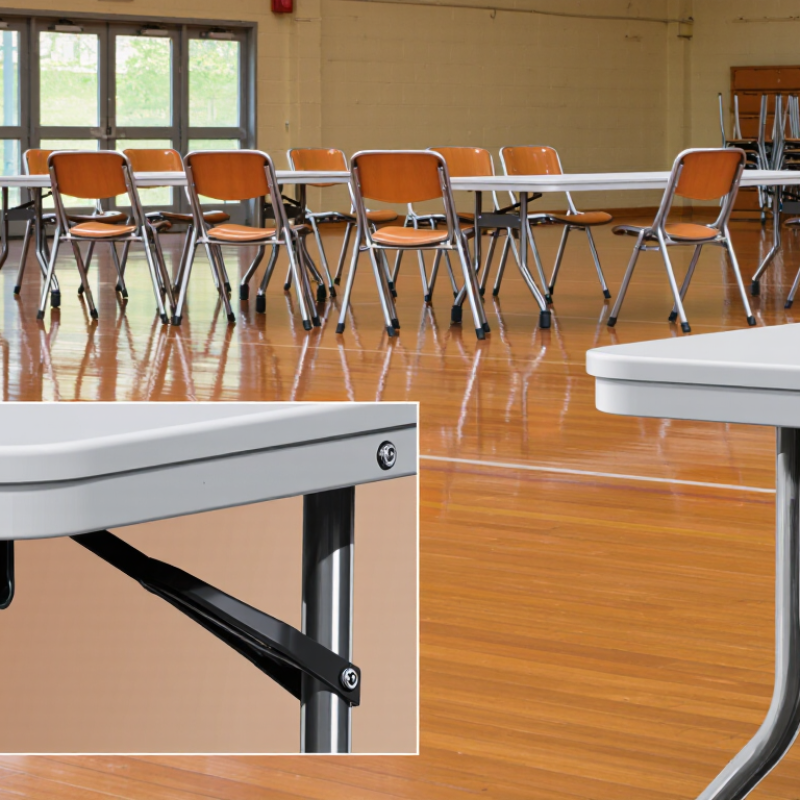
Commercial-grade folding furniture is built for repeated setup, heavier daily use, and less gentle handling than typical household pieces. Its frame should resist twisting when someone shifts weight, while hinges and locking braces should open smoothly and stay securely engaged. Look for reinforced joints, corrosion-resistant hardware, and a stable stance on hard floors. A thick tabletop alone proves little. The connection points matter.
Materials should match the setting. Powder-coated steel can handle frequent movement, while well-made aluminum is lighter to carry; dense, impact-resistant plastic suits damp or easy-clean areas. Ask whether the furniture has been load-tested and cycle-tested, and check what those tests actually measure. A single load rating does not predict years of service. Real life is messier. Dragging legs across concrete, storing wet chairs, or forcing a stiff hinge can shorten service life quickly. Inspect welds, fasteners, feet, and folding locks periodically, especially in high-traffic rooms. “Commercial grade” is not a magic label, and standards vary by product and use. Judge the construction, test information, repairability, and fit for the room together—not by weight or price alone.
Factors That Determine Its Service Life
Commercial folding furniture has no fixed service life. Daily use in a school cafeteria differs from occasional use in a meeting room. Load, handling, storage, and maintenance all matter. A chair dragged across rough concrete may develop loose joints sooner than one lifted and stacked carefully. Small details count.
The ANSI/BIFMA X5.1-2017 standard includes a 100,000-cycle seat durability test for applicable office chairs. That is a useful benchmark, not a lifespan promise for every folding chair. ASTM F1561 also sets performance requirements for plastic chairs, including stability and strength. Check which standards apply to the specific product.
Frame material matters, too: steel can resist heavy use, but chipped coatings may invite corrosion in damp storage. Hinges and fasteners often need closer attention than the seat itself. Keep them clean and inspect for play. It takes minutes.
Frequent overloading, outdoor exposure, and hard stacking can shorten service life. Sunlight may fade or weaken some plastics; moisture can damage finishes and hardware. A realistic inspection looks for cracked seats, bent legs, failing welds, and hinges that no longer lock securely. Record repairs and usage patterns. It is easy to overlook one loose bolt until the chair wobbles. Standards help compare tested performance, but actual wear depends on the room, the users, and the care routine. That uncertainty deserves attention.
Typical Lifespans by Material and Usage
Commercial folding furniture has no single, audited lifespan across materials and settings. As practical planning ranges, steel-frame chairs and tables often serve 8–15 years with moderate use; aluminum units, about 7–12. Resin or polypropylene pieces may last 4–8 years indoors, while wood commonly falls around 6–12. These are estimates, not measured industry-wide averages. Heavy daily use can shorten them substantially.
Usage changes the picture. In busy cafeterias, event venues, or school halls, folding hinges and fasteners may wear before the frame. A useful rule of thumb is to plan for roughly half the moderate-use range when furniture is opened, folded, and stacked repeatedly. ANSI/BIFMA X5.1-2017 includes a 100,000-cycle seat durability test for office seating, but that benchmark does not directly predict years of life for folding chairs. ASTM F1561 evaluates outdoor plastic chairs through performance testing, not calendar-life claims. That matters. Inspect hinge play, loose rivets, cracked welds, and brittle seats; a small wobble can signal trouble. I would treat these ranges as budgeting guidance, not a promise—real-world storage conditions are easy to underestimate.
How Long Does Commercial Grade Folding Furniture Last? - Typical Lifespans by Material and Usage
The ranges below are practical planning estimates for commercial folding furniture, not guarantees or warranty periods. “Moderate use” means occasional event or meeting use with careful storage; “heavy daily use” means frequent setup, folding, transport, and use in a busy venue.
| Material or Construction |
Typical Lifespan
Moderate Use |
Typical Lifespan
Heavy Daily Use |
Factors That Affect Service Life |
| Powder-coated steel frame |
7–12 years |
4–8 years |
Coating damage, corrosion, overloaded frames, loose fasteners, and outdoor exposure can shorten the life of the frame. |
| Aluminum frame |
8–15 years |
5–10 years |
Aluminum resists rust, but joints, hinges, and fasteners can wear or loosen with repeated folding and transport. |
| High-density polyethylene (HDPE) tabletop with metal frame |
5–10 years |
3–7 years |
Prolonged sunlight, high heat, impact, surface damage, and frame wear influence longevity. The tabletop and frame may age at different rates. |
| Molded polypropylene chair |
5–10 years |
3–7 years |
UV exposure, cold-weather impact, repeated stacking, and stress around hinges or load-bearing points can cause fading, brittleness, or cracking. |
| Hardwood folding furniture |
8–15 years |
5–10 years |
Moisture, finish maintenance, joint wear, impacts, and storage conditions matter. Keeping wood dry helps reduce swelling and splitting. |
| Fabric or vinyl seat and back components |
3–8 years |
1–5 years |
These components may need replacement before the frame. Abrasion, spills, cleaning chemicals, UV exposure, and seam or fastener wear are common factors. |
Signs That Folding Furniture Needs Repair or Replacement
Commercial folding furniture usually shows wear before it fails. Check the hinge line, locking braces, rivets, welds, and feet during routine inspections. A chair that rocks on a level floor, opens unevenly, or will not lock securely needs attention. So does a table with a loose leg or a cracked support. Small signs can become serious under repeated use.
ANSI/BIFMA X5.1-2017 includes a 100,000-cycle seat durability test for general-purpose office chairs. It is a useful benchmark, not a lifespan guarantee for folding furniture. Folding models have different joints and mechanisms, so inspect those parts closely. Look for elongated bolt holes, metal fatigue, sharp burrs, or a hinge that binds. On fabric seats, check for torn seams and exposed frame edges. A few scratches are not a verdict.
Repair may be sensible when a replaceable fastener or foot is the only problem, and the frame remains straight. Replace the unit if a load-bearing weld is cracked, a brace is bent, or the lock slips after adjustment. Do not guess. One uncomfortable truth: routine checks are often skipped when furniture looks clean. Yet a polished surface can hide a tired hinge. Keep a simple inspection log, and note recurring defects rather than relying on memory.
How Long Does Commercial-Grade Folding Furniture Last?
These are general planning estimates for regularly used commercial furniture, not guaranteed lifespans. Frequent heavy use, outdoor exposure, overloading, and poor storage can shorten service life. Repair furniture with fixable loose joints or hardware; replace it if its frame is cracked, unstable, or no longer safe after repair.
Maintenance Practices That Extend Furniture Life
For commercial-grade folding furniture, maintenance often matters more than appearance. Wipe seats and tabletops with mild soap and water, then dry them fully, especially around hinges and rivets. Moisture trapped in joints can encourage corrosion and leave stiff, gritty folding action. Small habits matter. Avoid dragging stacked chairs across concrete; lift them by the frame instead. Check feet, fasteners, welds, and locking braces monthly, or more often in busy venues. A loose brace can turn an ordinary setup into a safety concern.
Use load limits as operating boundaries, not suggestions. ANSI/BIFMA X5.1-2017 includes a 120,000-cycle backrest durability test for general-purpose office seating. That figure describes a laboratory test, not a promised lifespan for folding chairs, whose frames and hinges face different stresses. It is useful context, but not a reason to skip inspections. Clean spills promptly, keep furniture dry before storage, and avoid leaning folded pieces against sharp edges. Lubricate moving joints only with a product approved for the furniture’s materials; excess oil can collect dust. People often remember to clean the seat and forget the hinge. That is an easy mistake. Small cracks, wobble, or a latch that no longer engages smoothly deserve attention before the next event.
FAQS
Steel-frame pieces often last 8–15 years with moderate use. Aluminum may last 7–12 years, while resin often lasts 4–8 years indoors. These are planning estimates, not guarantees.
Repeated folding and stacking can wear hinges and fasteners before the frame. In busy venues, planning for roughly half the moderate-use range may be more realistic. Not a promise.
Check for wobbling, uneven opening, loose rivets, cracked welds, bent braces, or a lock that slips. A polished surface can hide a tired hinge. Look closely.
Repair may make sense when only a replaceable foot or fastener is loose and the frame stays straight. Replace a unit with a cracked load-bearing weld, bent brace, or unreliable lock.
Wipe it with mild soap and water, then dry it fully. Pay special attention to hinges and rivets, where trapped moisture can encourage corrosion.
Keep furniture dry before storage, and lift stacked chairs instead of dragging them across concrete. Avoid leaning folded pieces against sharp edges. Small habits matter.
No. Laboratory cycle tests offer useful benchmarks, but they do not directly predict years of service for folding furniture. Its hinges and joints face different stresses.
Check feet, fasteners, welds, and locking braces monthly, or more often in busy venues. Keep a simple log of recurring defects. I would not rely on memory alone.
Conclusion
Commercial-grade folding furniture is built for frequent use, with durable frames, reinforced joints, and surfaces designed to handle repeated setup, storage, and transport. Its service life depends on material quality, construction, how often it is used, the weight it supports, and the conditions in which it is stored. So, what is the average lifespan of commercial grade folding furniture? There is no single answer: well-made pieces used carefully may last for many years, while heavy daily use, outdoor exposure, or rough handling can shorten their useful life.
Regularly check for loose fasteners, bent frames, cracked seats, unstable legs, or hinges that no longer lock securely. These signs may call for repair or replacement, especially when they affect stability. To extend furniture life, clean it with suitable products, dry it before storage, avoid exceeding its intended capacity, and keep it in a dry, protected place. Routine inspection and careful handling can help folding furniture remain safe and dependable over time.

 Zabs Furniture