China remains a major source of folding tables for homes, schools, exhibitions, and commercial events. However, low price alone does not prove safe engineering. A stable table depends on frame geometry, hinge quality, locking strength, load distribution, and floor contact.
The U.S. Consumer Product Safety Commission’s 2023 Annual Report explains that NEISS estimates consumer injuries through a sample of 96 hospitals. It does not isolate every folding-table incident, but it shows why product stability deserves careful attention. The European standard EN 15372 evaluates non-domestic tables for strength, durability, and safety. Reliable manufacturers should consider these principles during design and testing. BIFMA industry guidance also supports documented performance testing for commercial furniture.
Small details matter.
A loose hinge can shift when someone leans on the edge. A partially engaged leg lock may look secure but release under sideways force. Uneven floors can make a correctly designed table feel unstable. This guide examines how to prevent folding tables from collapsing during use, with practical checks for buyers, distributors, and manufacturers in China.
Look for reinforced hinges, positive locking mechanisms, non-slip feet, and clearly stated load limits. Ask suppliers for test records, inspection procedures, and material specifications. Visual inspection is useful, but it cannot replace repeated load and impact testing. That point is easy to overlook.
Some recommendations require context. A table used for trade shows faces different forces from one used in a classroom. Therefore, selecting the “best” folding table requires matching its construction to its real environment, not trusting marketing language alone.
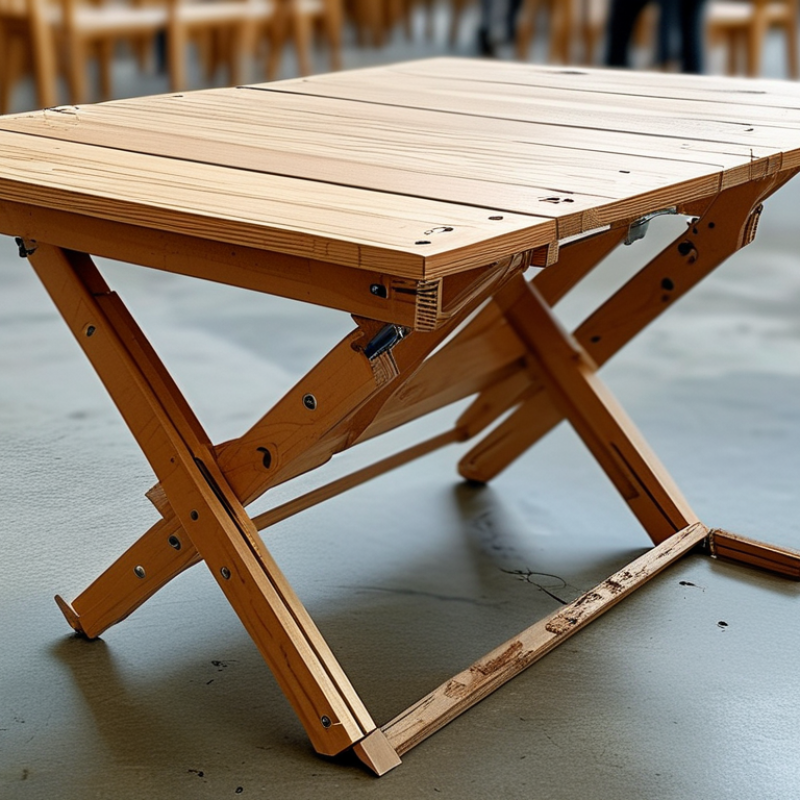
A folding table does not collapse for one reason. Its frame design decides how weight travels from the surface to the floor. Banquet tables usually use steel legs, hinged brackets, and a broad rectangular top. Their long aprons improve stiffness, but loose hinge rivets can create sudden movement. Plastic folding tables often use molded tops with steel tube legs. They are lighter, yet their leg sockets and crossbars deserve close inspection. Compact card tables use four independent legs and central folding joints. They store easily. However, they can twist when one leg sits on an uneven floor.
Trestle tables have two end supports connected by a frame or locking beam. This layout spreads loads well, especially under a long tabletop. Portable camping tables may use scissor legs, fabric tops, and small locking collars. They prioritize low weight over rigid support. The structural difference matters more than appearance. A table with diagonal braces resists side sway better than one with plain hinged legs. A positive leg lock prevents accidental folding during use; a weak friction joint does not.
From practical setup work, I check every hinge, brace, and locking pin before loading a table. The legs should open fully, and each foot should touch the floor. Never rely on weight alone to hold a folding frame open. A damaged rivet needs replacement, not repeated tightening. I have learned one uncomfortable lesson: a clean tabletop can hide a tired frame. Load ratings also need careful reading; uneven loads can exceed a table’s safe capacity. Even careful inspections are not perfect. That uncertainty makes stable placement and moderate loading essential.
Typical structural differences among folding table designs. A value of 1 indicates that the feature is commonly present in the table type, while 0 indicates that it is not normally part of the basic configuration. Actual specifications vary by model and load rating.
To reduce the risk of collapse, choose tables with positive leg locks, diagonal bracing, a rigid perimeter apron, and adjustable feet. Before use, fully open the frame, engage every lock, place the table on a level surface, and keep loads within the manufacturer’s rated capacity.
A stable folding table begins with its frame, not its tabletop. In factory inspections, I look for synchronized steel legs, wide foot contact, and hinges that lock visibly. A locking bar should resist sideways movement when the table is pushed from different angles. Small gaps around the hinge often reveal poor alignment.
EN 581-3:2017 evaluates outdoor tables through stability, strength, and durability tests. Its approach shows why a strong tabletop alone is insufficient. The leg geometry must distribute force across the floor.
BIFMA G1 testing guidance also emphasizes repeatable stability and durability checks for furniture structures. Reliable Chinese manufacturers should document load testing, cycle testing, and inspection results, rather than offering only a maximum-load figure. Numbers without test conditions can mislead buyers.
Look underneath.
A useful design includes non-slip feet, reinforced hinge plates, and a positive locking mechanism that cannot release accidentally. Rounded leg ends also reduce floor damage and shifting. Before purchase, place the table on a hard floor and apply pressure near each corner. It should not rock, twist, or produce sharp metal sounds. I have seen tables pass a simple weight test but wobble during side loading. That weakness is easy to miss. Weather, uneven floors, and repeated folding can worsen it. A stronger design may use thicker tubing, but excessive weight can reduce portability. The best specification balances stability, material thickness, hinge quality, and practical handling. Test records should identify the sample, load direction, test cycles, and failure point.
A folding table rarely collapses without warning. The warning is usually a weak lock, loose hinge, or uneven leg. During site inspections, I press each tabletop corner gently before placing equipment. Any rocking deserves attention. The U.S. Bureau of Labor Statistics reported 2.6 million nonfatal workplace injuries and illnesses in private industry during 2023. Not every case involves furniture, but unstable work surfaces can add preventable risk.
Check every locking ring, latch, and support bar. The lock should engage fully, not halfway. Pull the tabletop upward lightly. It should resist movement. Inspect hinges for bent plates, missing fasteners, and crushed plastic. Open each leg completely, then confirm its brace sits flat. Look underneath the table, too. Dirt can block a locking slot. Uneven feet need adjustment before use. Never rely on friction alone.
Joints deserve a slow inspection. Wiggle each connection and watch for gaps, clicking, or fresh metal dust. The ANSI/BIFMA X5.5 standard emphasizes stability and durability testing for multipurpose tables, but field conditions remain different. Repeated folding can loosen hardware faster than expected. I once accepted a clean-looking table without checking one side hinge. That was careless. A second inspection would have caught the slight twist. If a lock feels uncertain, remove the table from service and repair it according to the manufacturer’s instructions. Safety checks are boring. They are also cheaper than a sudden collapse.
| No. | Component to Check | Inspection Method Before Use | Acceptable Condition | Warning Signs | Recommended Action |
|---|---|---|---|---|---|
| 1 | Safety locks | Open the table fully and confirm each locking mechanism engages. Apply light downward pressure near the tabletop edges. | Locks engage completely, remain closed, and prevent the legs or folding frame from moving. | Lock does not click into place, releases under light pressure, or has a bent catch or missing spring. | Do not use |
| 2 | Hinges | Fold and unfold the table slowly while observing hinge movement, fasteners, and alignment. | Hinges move smoothly without excessive side-to-side play, sharp edges, or binding. | Cracks, exposed deformation, loose rivets, missing screws, grinding, or uneven folding. | Repair or replace |
| 3 | Leg tubes | Inspect every leg from top to foot and place the table on a firm, level surface. | Legs are straight, firmly attached, and free from visible bends, splits, or severe corrosion. | Bent tubing, buckling, dents near joints, sharp projections, or significant rust that weakens the metal. | Remove from service |
| 4 | Leg braces | Check cross-braces and support bars while the table is open; gently test for looseness. | Braces are securely attached and resist movement when light hand pressure is applied. | Loose brace ends, missing fasteners, cracked welds, or a brace that folds unexpectedly. | Tighten and inspect |
| 5 | Leg joints and pivots | Look at pivot bolts, washers, rivets, and bushings. Check that the joint does not wobble excessively. | Fasteners are present and secure; the joint allows normal folding without excessive play. | Missing hardware, elongated holes, severe looseness, cracked plastic fittings, or joint separation. | Do not operate |
| 6 | Foot caps and levelers | Inspect the contact points and rock the table gently on a hard, level floor. | All feet contact the floor evenly, and caps or adjustable levelers are firmly fitted. | Missing foot caps, uneven contact, a damaged leveler, or persistent rocking. | Level before use |
| 7 | Tabletop attachment | Press lightly at several points on the tabletop and inspect the connection between the top and folding frame. | The tabletop remains stable with no lifting, separation, severe flexing, or loose mounting points. | Delamination, cracks around fasteners, loose panels, or movement between the top and frame. | Stop using |
| 8 | Frame alignment | View the table from all sides and compare the leg positions, frame members, and tabletop edges. | The frame is symmetrical and sits squarely without twisting or leaning. | Twisted frame, uneven leg angles, leaning tabletop, or visible stress at connection points. | Qualified inspection |
| 9 | Surface and edges | Run a visual and hand inspection around the tabletop, corners, underside, and edges. | No sharp edges, exposed fasteners, deep structural cracks, or damage that affects stability. | Sharp splinters, fractured corners, exposed metal, or moisture damage near structural connections. | Protect or replace |
| 10 | Final stability test | With the table empty, apply light pressure in different directions. Then load it gradually within the stated capacity. | The table remains stable, does not fold, slide, or shift unexpectedly, and stays within its rated load. | Sudden movement, clicking from a releasing lock, leg spread, frame distortion, or excessive wobbling. | Unload immediately |
A folding table collapses when its locking points, legs, or floor contact are ignored. The U.S. Consumer Product Safety Commission’s NEISS injury surveillance system shows that falls remain a recurring source of household and workplace injuries. Its data is not table-specific, but it supports a simple rule: stability checks matter.
Use this step-by-step method. Open the table fully on a level, dry surface. Push each leg outward until the hinge locks. Listen for the click, then pull the tabletop upward gently. Inspect the locking bars for cracks, loose screws, or bent metal. Do not use the table if one leg rocks. Fix the uneven floor instead of forcing the frame. Keep heavy items near the center, not at the edges. Leave clear space around the legs.
Check the manufacturer’s load rating before adding equipment. OSHA’s walking-working-surfaces guidance also emphasizes clean, orderly areas and safe walking conditions. Wipe moisture from the feet and remove cables from under the frame. Test the table with light pressure before placing food, tools, or appliances on it. Never stand on the tabletop.
Recheck it during long events. Vibrations can loosen fittings. That step is easy to forget. In practice, even a correctly opened table may shift on soft flooring. Use a stable platform, but do not improvise unsafe braces. A quick inspection takes less than a minute. It may prevent a painful mistake.
China Best Folding Tables: How to Prevent Them Collapsing?
A folding table stays stable when its frame is fully opened and locked. Check every hinge, brace, and locking clip before use. The legs should sit flat on a firm, level surface. Uneven floors can create twisting pressure and sudden movement. Never place people, ladders, or heavy equipment on the tabletop. A table is not a platform.
Load management matters more than appearance. Check the stated weight limit, then keep a safety margin below it. Place heavier items near the center, not along one edge. Spread boxes across the surface instead of stacking them in one tall pile. Sudden impact is risky. Someone leaning against the edge may create more force than expected. In busy rooms, mark the usable area and keep walkways clear.
Maintenance should be simple and regular. Wipe away dust from joints, and remove moisture before folding the table. Inspect loose screws, bent legs, cracked plastic, and damaged locking parts. Tighten suitable fasteners carefully; over-tightening may damage the frame. Store tables vertically with support, rather than dropping them into a crowded stack. A table can look firm and still hide a weak hinge. This is an easy detail to miss. Recheck older tables before important events, because repeated folding gradually changes alignment. Replace any unit that cannot lock securely.
Frame design controls how weight travels from the tabletop to the floor. Banquet tables use hinged steel legs and long support aprons. Compact card tables use separate legs and central joints. Looks can mislead.
Tables with diagonal braces usually resist side sway better. Plain hinged legs may move more under uneven pressure. Trestle designs spread loads through two end supports and a connecting beam.
Open every leg fully on a dry, level surface. Listen for the locking click. Then pull the tabletop upward gently. Check hinges, braces, pins, screws, and locking bars for damage.
Stop using the table immediately. Correct the uneven floor instead of forcing the frame. Each foot should touch the ground firmly. Do not add improvised braces.
Check the stated load limit before adding equipment. Keep heavy objects near the center. Spread boxes across the surface instead of making one tall stack. Leave a safety margin below the limit.
No. A tabletop is not a platform. Standing, climbing, or leaning heavily against an edge can create sudden force. Keep ladders, people, and heavy equipment away from it.
Wipe dust from joints and remove moisture before storage. Inspect cracked plastic, bent legs, loose screws, and damaged locking parts. Tighten suitable fasteners carefully. Over-tightening can harm the frame.
Store them vertically with proper support. Avoid dropping them into a crowded pile. Repeated folding can change alignment over time. Older tables deserve another inspection before important events.
Replace it when the legs cannot lock securely. A cracked joint, damaged rivet, or bent support may cause sudden movement. Repeated tightening is not a real repair. I still sometimes miss hidden hinge fatigue.
Folding tables come in various designs, including center-fold, bi-fold, and folding-leg models, each with different support structures and stability requirements. The most reliable designs typically feature reinforced frames, wide leg bases, secure locking systems, strong hinges, and well-connected joints. Before use, inspect every lock, hinge, leg, and joint to confirm that all parts are firmly attached, properly aligned, and free from cracks, looseness, or damage.
To understand how to prevent folding tables from collapsing during use, open the table completely, engage every safety lock, and place it on a flat, stable surface. Apply gentle pressure to test its stability before adding any items. Distribute weight evenly across the tabletop, avoid exceeding the recommended load, and keep heavy objects near the center. Regularly tighten loose hardware, clean moving parts, and store the table in a dry location. Proper setup, careful maintenance, and responsible load management can significantly improve long-term safety and stability.

Zabs Furniture