Candlelit dinners create warmth, but one tipped candle can leave a hard, oily mark on an expensive event tablecloth. Learning how to remove candle wax from event tablecloths requires patience, fabric awareness, and controlled heat. Linen, cotton, polyester, and blended fabrics can react differently. A method that saves one cloth may damage another.
Textile-care expert Mary Marlowe Leverette advises, “Treat the stain gently, and identify the fabric before choosing heat or solvents.” That guidance matters in busy venues. Scraping too aggressively can pull threads. Applying a hot iron directly can spread wax deeper. Even professional cleaners sometimes misjudge a fabric blend. That deserves attention.
This guide explains a practical process for removing candle wax without rushing the finish. You will learn how to harden excess wax, lift it carefully, and absorb the remaining residue. You will also see when mild detergent is appropriate and when professional cleaning is safer. Test every treatment on a hidden hem first. Always check the manufacturer’s care label.
The process is not perfect. Some colored waxes leave dye behind. Scented candles may also contain oils that create a second stain. Still, careful steps can protect the tablecloth’s texture, shape, and appearance. Keep paper towels, a dull knife, and low heat nearby. Work slowly. A clean result often depends more on restraint than force.
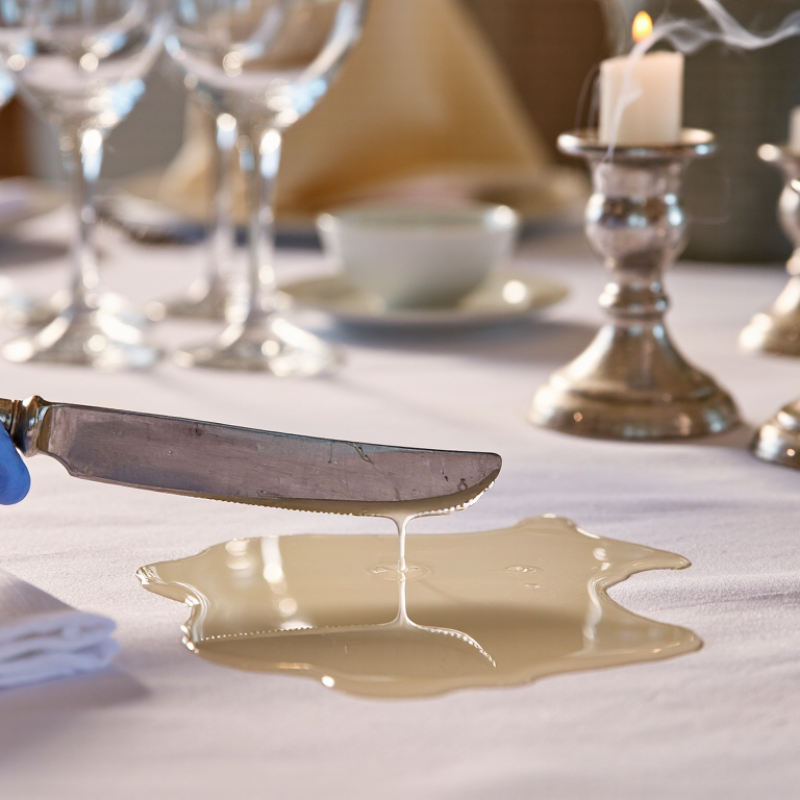
Before treating a candle mark, identify the wax type and inspect the tablecloth’s care label. Paraffin usually hardens into a smooth, translucent patch. Soy wax often feels softer and slightly greasy. Beeswax can look golden and leave a faint honey-like scent. Colored or scented wax may contain dyes and oils that spread during heating.
I once assumed all wax needed the same treatment. That was a poor assumption. The fiber matters just as much. Cotton and linen may tolerate gentle heat, while delicate blends or coated fabrics may require professional cleaning. Check the label for washing temperature, ironing limits, bleach warnings, and dry-cleaning instructions. If the label says “do not iron,” avoid heated removal completely. Test any method on a hidden hem first.
Let the wax cool fully. Scrape loose flakes with a dull plastic edge, not a sharp knife. Place absorbent paper above and below the stain only if the label permits low heat. Press briefly with a warm iron, then replace the paper as it absorbs melted wax. Never drag the iron across the fabric. For colored residue, stop when the mark spreads. A mild, label-approved detergent may help, but some dyes become permanent after heat. That possibility is easy to overlook. On a valuable event cloth, document the wax type, fabric, and stain size before treatment. This small record helps a cleaner choose a safer process.
Identify the wax type before selecting a removal method, then check the tablecloth care label. The chart shows typical melting-point ranges for common candle waxes.
Lower-temperature waxes may soften with gentle heat, but the care label should always be followed first. Use a protective paper layer between the iron and fabric, and avoid direct heat on synthetic or heat-sensitive tablecloths. Melting points vary by formulation, additives, and candle construction.
At a busy reception, one candle can leave wax across a white event tablecloth. Do not rub it while soft. Rubbing pushes wax deeper into the weave and spreads oily color. Extinguish the candle, move the cloth to a flat surface, and let the spill cool naturally. If possible, place the cloth on a clean towel. Keep the wax undisturbed.
For faster hardening, seal several ice cubes inside a plastic bag. Rest the bag over the wax for five to ten minutes. The wax should feel brittle, not merely cool. Use a dull table knife, spoon edge, or rigid card to lift thick pieces. Work from the outside toward the center. Never gouge the fibers. Experienced textile cleaners use short, gentle strokes because woven threads can snag easily. Brush away loose flakes with a soft clothes brush or a hand vacuum held above the surface.
Check the care label before treating the remaining stain. For washable fabric, place absorbent paper above and below the spot, then apply low heat briefly. Lift and replace the paper as it collects melted wax. Test a hidden hem first. I once overheated a delicate cloth and solved one problem by creating another. That mistake still matters. Patience protects the finish. If dye remains, stop and contact a qualified textile cleaner. Do not pour boiling water over the tablecloth. It can set dyes, distort fibers, or spread the wax.
Candle wax often hardens into a pale, brittle patch on event tablecloths. Let it cool fully, then lift the thicker pieces with a dull spoon. Avoid sharp tools. They may catch delicate fibers. Place absorbent paper over the remaining wax. A plain paper towel or uncoated blotting sheet works well. Cover the underside too, if wax has passed through the fabric.
Use gentle heat to transfer the wax into the paper. Set an iron to its lowest dry setting, without steam. Press lightly for a few seconds, then lift the iron. Move to a clean section of paper after each press. Repeat slowly until the paper stops showing oily marks. Never leave the iron still. Excess heat can flatten texture, discolor fabric, or spread the wax.
Tips: Test a hidden seam first. Skip heat on heat-sensitive or laminated textiles. I once rushed this step and created a faint shiny spot. Patience matters here. After the wax disappears, check the care label before treating any remaining shadow. A small amount of suitable laundry detergent may help, but rinse gently and avoid aggressive scrubbing. Dry the cloth naturally, because a dryer can set leftover oil into the fibers.
How to Remove Candle Wax from Event Tablecloths in 2026?
Candle wax usually hardens before it stains, so let it cool completely. Keep it cool. Place ice in a sealed bag if the wax remains soft. Gently lift the brittle pieces with a spoon or dull card. Never scrape aggressively, because flattened fibers can hold oily residue.
For polyester or cotton tablecloths, place white paper towels above and below the mark. Press briefly with a warm iron on the fabric’s lowest safe setting. Replace the paper as it absorbs the melted oil. Then apply a small amount of mild dish detergent to the remaining greasy area. Rinse thoroughly and inspect it before drying. High heat may permanently set the residue. I have found that rushing this step creates a larger ring.
Wax color changes the risk. White wax often leaves oil but little dye. Red, blue, or heavily scented wax may transfer pigment into pale linen. Blot, do not rub. A color-safe laundry treatment can help, but test it on a hidden hem first. Silk, wool, velvet, and coated fabrics need gentler handling; excessive heat or water can distort them. For valuable event linens, stop after lifting the wax and consult a qualified textile cleaner. Some stains look gone while damp, then return after drying. That is easy to miss.
How to Remove Candle Wax from Event Tablecloths in 2026?
Wax removal starts with restraint. Do not rub the fresh spill. Rubbing drives wax between the fibers and enlarges the mark. Let the wax cool completely, then lift hardened pieces with a dull plastic edge. Place absorbent paper above and below the remaining film. Press briefly with low, controlled heat. Check the cloth often. Too much heat can spread colored wax and weaken synthetic fibers.
Wash the tablecloth according to its care label. Pretreat the oily shadow with a small amount of liquid laundry detergent, then wait five minutes. Avoid chlorine bleach unless the fabric label permits it. The U.S. Department of Energy reports that water heating can represent about 90% of washer energy use, so a suitable cool or warm cycle is usually efficient. However, cold water may not remove every wax dye. That is where judgment matters.
Inspect the cloth before drying. Hold it near a bright window and check both sides, especially hems and folded corners. Never machine-dry a visible stain. Dryer heat can set residual oil and pigment permanently. Air-dry the cloth flat or hang it with space between layers. WRAP’s Valuing Our Clothes report found that extending textile use by nine months can reduce carbon, water, and waste footprints by about 20–30%. Reusing event linens depends on careful inspection, not speed. I sometimes miss faint shadows under warm room lighting. A second inspection after drying is worth the extra minute.
Let the wax cool completely. Use a sealed ice bag if it remains soft. Lift flakes with a spoon or dull plastic card.
Yes. Check washing temperatures, ironing limits, bleach warnings, and cleaning instructions. If ironing is forbidden, avoid heated removal completely.
Only when the label permits low heat. Place white absorbent paper above and below the stain. Press briefly, never drag the iron.
Replace it whenever it absorbs melted wax or oil. Fresh paper prevents residue from spreading across nearby fibers.
Apply a small amount of mild detergent to the greasy area. Rinse thoroughly and inspect it before drying. High heat can set residue permanently.
Yes. Red, blue, and scented wax may transfer pigment into pale fabric. Stop if the mark spreads. Blot, do not rub.
No. Cotton and linen may tolerate gentle heat, but silk, wool, velvet, and coated fabrics need gentler handling. I once assumed all wax behaved alike. That was wrong.
Remove loose wax without aggressive scraping. Record the wax type, fabric, and stain size. Then consult a qualified textile cleaner. Some stains return after drying.
Learning how to remove candle wax from event tablecloths begins with identifying the wax type and reading the fabric care label. Different waxes and materials require different handling, so avoid scraping aggressively or applying heat before checking what the tablecloth can safely tolerate. Once the wax is hardened, gently lift off the excess with a dull edge. Place absorbent paper over the remaining wax and use low, controlled heat to transfer it from the fabric into the paper, replacing the paper as it absorbs the residue.
After the visible wax is removed, treat any oily mark according to the tablecloth’s fabric and the candle wax color. Use a suitable, gentle stain treatment and test it on an inconspicuous area first. Wash the tablecloth according to its care instructions, then inspect it carefully before drying. Do not use high heat until the stain is completely gone, since heat can permanently set leftover wax or color.

Zabs Furniture