7 Tips to Repair Damaged Vinyl Padding on Folding Chairs?

Time:2026-10-08 Author:Charlotte
0%

Damaged vinyl padding can make a folding chair look worn, uncomfortable, and less dependable. Small cracks often spread around seams, especially when chairs are folded repeatedly or stored in hot, damp areas. Learning how to repair damaged vinyl padding on folding chairs can restore comfort without replacing the entire seat.

This guide shares seven practical tips based on common upholstery repair methods. You will learn how to inspect the vinyl, clean the damaged area, choose a suitable patch, and apply adhesive carefully. A clean work surface matters. So does patience. Rushed repairs may leave wrinkles, loose edges, or visible glue marks. Use sharp scissors, matching vinyl, flexible adhesive, and a blunt tool for smoothing. Always follow the product label and test materials on a hidden area first.

Not every chair deserves the same repair. A shallow scratch may need only vinyl filler, while a large tear may require a backing patch or new upholstery. Check the foam beneath the cover. If it feels damp, flattened, or crumbly, the visible damage is only part of the problem. Also inspect the folding joints before use. A repaired cushion cannot correct a weak frame or loose fastener. These tips should help with ordinary household damage, but some repairs may look imperfect. That is normal. Careful work improves the result, yet replacement can sometimes be the safer and more practical choice.
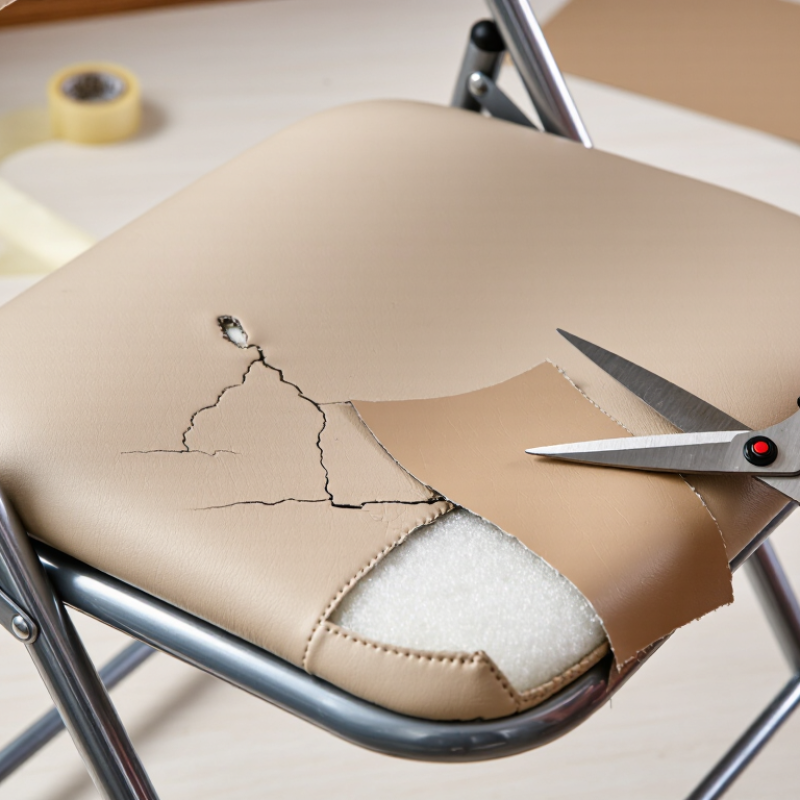
7 Tips to Repair Damaged Vinyl Padding on Folding Chairs?

Classify the Damage: Repair Tears Under 2 in. (5 cm) Before Reupholstering

Small tears in vinyl padding can look worse than they are. Measure the damaged area before buying materials or removing the cover. A clean tear under 2 inches, or 5 centimeters, is often repairable. A split seam, loose backing, or exposed foam needs closer inspection.

Start by opening the folding chair and checking the vinyl from several angles. Look beneath the seat, where metal edges may rub during folding. Wipe away dust with a damp cloth, then dry the surface completely. Trim only loose vinyl threads. Do not enlarge the tear while cleaning it. For a narrow cut, place a vinyl patch beneath the opening and apply flexible adhesive sparingly. Press the edges together with a flat tool. Keep pressure steady.

Give it time.

A professional repair should remain flexible after curing. Test the chair by folding it slowly and sitting down carefully. If the patch lifts, the vinyl may be too brittle for another surface repair. Replace the cover instead. Larger tears, crushed foam, and stretched material usually require reupholstering. I once repaired a short tear without checking the underside. The metal frame reopened it within a week. That mistake taught me to inspect movement points before trusting a neat surface repair. Measure twice, and mark the tear’s direction before cutting any replacement vinyl.

Remove the Seat and Inspect Foam at 1.8–2.5 lb/ft³ Density

Set the folding chair on a stable workbench and open it fully. Photograph the damaged vinyl before removing anything. This record helps you restore the original shape later. Remove the seat carefully with a screwdriver or staple lifter. Keep every screw in a small container. Mark the front edge with chalk.

Inspect the foam under the vinyl. Look for crumbling edges, flattened areas, stains, and a sour smell. A suitable replacement usually has a density of 1.8–2.5 lb/ft³. Density describes material weight, not softness. Do not choose foam by thickness alone. Press the center and corners separately. If the foam stays compressed, feels brittle, or shows moisture damage, replace it. I once judged foam by touch and misread its firmness. That mistake caused uneven seating.

Measure the old pad after removing loose material. Cut replacement foam slightly larger than the wooden seat, then trim gradually. Place a thin protective layer over sharp edges. Position the vinyl without pulling it tightly at first. Fold opposite sides underneath and install a few temporary staples. Check the corners before adding more staples. Smooth wrinkles with steady pressure, not force. Excess tension can split old vinyl later. Reattach the seat and test the folding movement several times. Watch for rubbing, loose hardware, or a pad that shifts during use. Repair work is rarely perfect on the first attempt. Inspect it again after a day.

7 Tips to Repair Damaged Vinyl Padding on Folding Chairs

Remove the seat and inspect the foam before repairing the vinyl cover. A foam density of 1.8–2.5 lb/ft³ is the specified inspection range for this guide.

The chart shows the lower limit, midpoint, and upper limit of the recommended foam-density range. Replace foam that is badly compressed, crumbling, or outside the usable range before installing new vinyl.

Clean with 70% Isopropyl Alcohol and Roughen Vinyl for Adhesion

7 Tips to Repair Damaged Vinyl Padding on Folding Chairs

Tip 1: Inspect the damage before cleaning. Small tears need flexible vinyl adhesive, while crushed foam may require padding replacement. Press the area gently. It should recover without permanent flattening.

Tip 2: Clean the vinyl with 70% isopropyl alcohol. Apply it to a lint-free cloth, not directly onto the chair. Wipe away grease, dust, and plasticizer residue. The CDC recognizes alcohol solutions between 60% and 90% as effective surface disinfectants, but disinfection is not the same as adhesive preparation. Let the surface dry completely.

Tip 3: Test first. Vinyl finishes vary, and alcohol can dull some coatings. Choose a hidden area beneath the seat. I once skipped this check and created a faint cloudy patch. It was repairable, but avoidable.

Tip 4: Roughen the vinyl lightly for better adhesion. Use 320- to 400-grit abrasive paper around the damaged area. Sand until the shine becomes a soft, even haze. Do not cut deeply into the vinyl layer.

Tip 5: Apply adhesive in thin layers. Thick glue can remain soft and create a visible ridge. Hold the edges together with low-pressure tape or a smooth weight. Follow the adhesive’s curing time precisely.

Tip 6: Inspect the bond after curing. ASTM D3359 grades coating adhesion from 0B to 5B, although this test does not directly predict flexible vinyl performance. A repair should resist gentle lifting without stretching the surrounding material.

Tip 7: Recheck the chair before use. Folding movement adds stress near seams and corners. Repair quality improves with patience, clean surfaces, and realistic expectations.

Use a Backing Patch with at Least 1 in. (2.5 cm) Overlap

7 Tips to Repair Damaged Vinyl Padding on Folding Chairs?

Use a Backing Patch with at Least 1 in. (2.5 cm) Overlap

Repairing torn vinyl starts with a careful inspection. Open and close the chair gently, then check whether the foam or plywood beneath the cover has shifted. Wipe away dust and grease with a mild cleaner, and let the surface dry completely. A clean surface gives the repair a better chance of lasting.

Tips: Cut a flexible backing patch with at least 1 inch (2.5 cm) of overlap around every damaged edge. Round the patch corners to prevent lifting. Slide it beneath the tear, then apply a suitable vinyl adhesive in a thin, even layer. Press the vinyl flat with a clean cloth, working from the center outward. Small weights can hold the repair while it cures. Follow the adhesive’s curing instructions carefully.

For larger splits, trim loose threads without removing sound material. Match the replacement vinyl’s thickness as closely as possible, because a thin patch may show a ridge. I once rushed a repair and pressed too hard, leaving a permanent crease. That mistake taught me to use steady pressure instead. Test the chair only after the adhesive has fully cured. Inspect the hinge area again, since repeated folding can pull against a weak patch. A neat repair is useful, but a secure repair matters more.

Apply Vinyl Adhesive, Restore Grain, and Allow a Full 24-Hour Cure

Damaged vinyl padding on folding chairs can often be repaired without replacing the whole seat.

I have found that careful preparation matters more than fast application. Inspect the tear first. If the foam is wet, crushed, or exposed, let it dry and replace weak sections. Trim loose vinyl with sharp scissors, but avoid cutting into sound material.

Wipe the surface with mild soap and water, then let it dry completely. Dust and grease can weaken the bond.

Test the vinyl adhesive on a hidden area. Some adhesives soften the surface or change its color. Apply a thin, even layer beneath the torn edges, using a small brush or disposable tool. Press the edges together gently. Too much adhesive creates a hard ridge and makes the repair visible. Hold the area with low-tack tape or a padded clamp. Do not stretch the vinyl aggressively. It may pull apart again when the chair folds.

Restore the grain while the adhesive remains workable. Press a matching texture lightly into the surface, using a clean cloth or a small textured roller. Work slowly around the repair. The pattern may not match perfectly, and that is worth checking from several angles. Wipe away excess adhesive before it dries. Leave the chair flat and undisturbed for a full 24-hour cure. A full 24-hour cure matters. Avoid sitting on it early, even if the patch feels firm. Humidity, cool rooms, and thick adhesive can extend curing time. Test the fold only after the repaired area feels dry, flexible, and secure.

FAQS

How can I tell whether a vinyl tear is repairable?

Measure the tear before removing the cover. A clean tear under 2 inches may be repairable. Split seams, exposed foam, crushed padding, and loose backing need closer inspection.

What should I inspect before repairing the chair?

Open and close the chair gently. Check beneath the seat and around metal edges. These moving points can reopen a neat surface repair.

How should I clean the damaged vinyl?

Wipe dust and grease from the surface. Use 70% isopropyl alcohol on a lint-free cloth, not directly on the vinyl. Let it dry completely.

Should I test the cleaner first?

Yes. Test it beneath the seat. Some vinyl coatings may become dull or cloudy. I once skipped this check and created a faint cloudy patch.

What size backing patch should I use?

Choose a flexible patch with at least 1 inch of overlap around every damaged edge. Round the corners to reduce lifting.

How do I apply the backing patch?

Slide it beneath the tear. Apply adhesive in a thin, even layer. Press the vinyl from the center outward with a clean cloth. Use light pressure.

How can I improve adhesive grip?

Lightly roughen the surrounding vinyl with 320- to 400-grit abrasive paper. Stop when the shine becomes a soft haze. Do not cut deeply.

When should I replace the cover instead of repairing it?

Replace it when the tear is large, the foam stays crushed, or the vinyl feels brittle. If the patch lifts after curing, another surface repair may fail.

How long should the repair cure before testing?

Follow the adhesive’s curing instructions exactly. Give it time. Test the chair only afterward, folding it slowly and sitting down carefully.

What mistake should I avoid during this repair?

Do not press too hard or rush the process. I once created a permanent crease by pressing too firmly. Steady pressure works better.

Conclusion

Learning how to repair damaged vinyl padding on folding chairs starts with assessing the damage. Small tears under 2 inches can often be repaired, while larger or severely worn areas may require reupholstering. Remove the seat carefully and inspect the foam beneath it, replacing foam if necessary with a suitable density of approximately 1.8–2.5 lb/ft³. Before applying anything, clean the vinyl with 70% isopropyl alcohol and lightly roughen the surrounding surface to improve adhesion.

For a lasting repair, place a backing patch beneath the tear, making sure it extends at least 1 inch beyond the damaged area on every side. Apply flexible vinyl adhesive evenly, press the edges together, and recreate the original surface grain as closely as possible. Keep the repaired section undisturbed while it cures for a full 24 hours. This careful process can restore both the appearance and everyday usefulness of folding chairs.

Charlotte

Charlotte

Charlotte is a seasoned marketing professional with a deep understanding of the company's portfolio and a passion for elevating its presence in the market. With a keen eye for detail and a commitment to excellence, she ensures that our professional blog is regularly updated with insightful articles......